Camera before quote
Drain Cleaning and Rooter Service
A slow drain is easy to ignore right up until it stops draining at all. We clear it properly the first time, and we look at the line with a camera before we ever tell you it needs a dig.
Chapter 01
The supermarket bottle is the expensive option
A bottle of drain cleaner off the shelf looks like the cheap fix, and it is usually the opposite. Most of those products work by dissolving whatever is blocking the line with a strong chemical, and that chemical does not stop at the clog. It sits against the inside of the pipe doing the same thing to the pipe itself, and older metal drain lines take that damage worse than newer plastic ones.
We do not clear a line that way. Whatever method we use is mechanical or pressure based, moving the blockage out of the pipe rather than eating through it, which is the difference between a line that is clear and a line that is clear and also weaker than it was before we showed up.
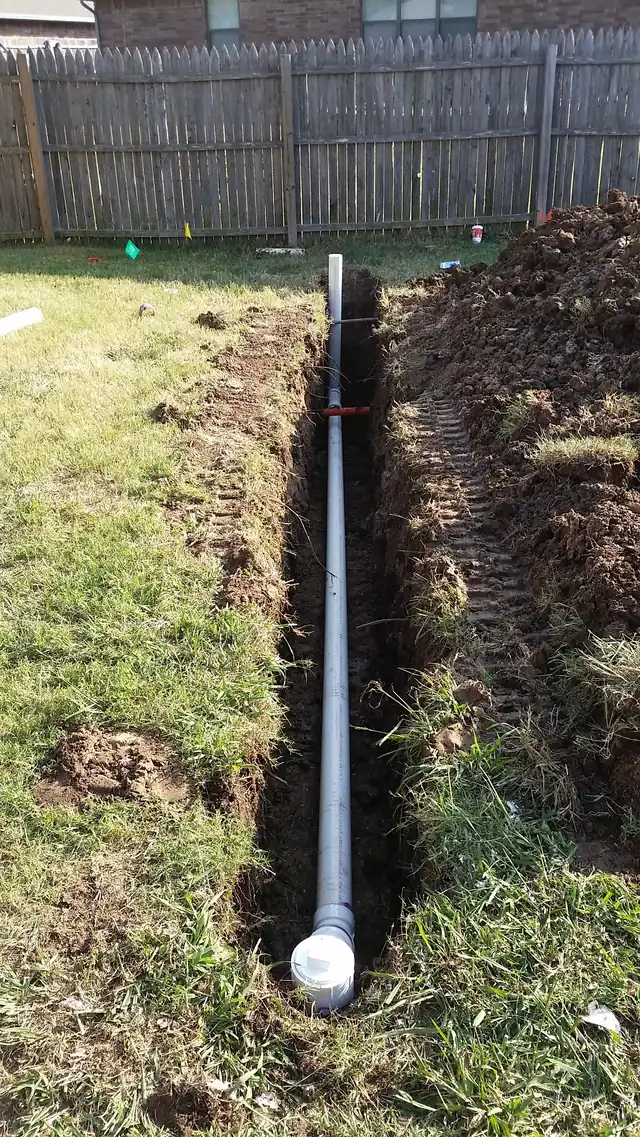
An open trench in a back yard with a new PVC sewer line laid in and a clean-out fitting installed.
Rooter, jetting or camera first
Not every clog needs the same tool. A rooter cutting head is built to cut through roots and break up a solid blockage, and it is the right call when something specific is sitting in the line. We turn to drain jetting instead when the problem is grease or general buildup along a long run of line rather than one obstruction, since high pressure water scours the pipe walls clean in a way a cutting head cannot.
Where we start depends on what the line is actually doing. A slow drain that has been getting slower for months reads differently than one that stopped overnight, and a camera video inspection run down the line settles the question before anyone commits to a method. That is also how we tell a simple clog apart from a line that is actually cracked or offset, which changes the whole conversation.
Chapter 03
When it is the line, not the fixture
A single slow sink is often just that sink. A few signs tell you the problem is further down, in the line itself rather than the fixture in front of you. Foul-smelling water coming back up a drain is one of them, since a healthy line carries waste away instead of holding onto it.
Water backed up in a sink or toilet with a stalled outflow, water that rises and then just sits there instead of draining down, is another. So is damp turning up somewhere it has no business being, a damp patch on a wall or ceiling near a drain run with no other explanation. Any one of those on its own is worth a look before it becomes the other two.
This trench, dug the same week, replaced an old steel sewer line with new PVC and a proper clean-out, the kind of access point that turns the next clog into a five minute fix instead of a dig.
What actually causes it
What puts a drain there in the first place
Grease is the most common one. It goes down warm and liquid and then cools and hardens against the inside of the pipe, and every pour after that sticks to the layer already there until the line narrows to almost nothing. The other is whatever should never have gone down the drain in the first place, anything solid that does not break down in water, which finds the narrowest point in the line and stops there.
A camera video inspection settles which one you are dealing with, and whether it is a clog at all or a line that has actually cracked or shifted, before anyone quotes you a dig. Seniors, teachers and military get 10% off drain cleaning, ask when you call.
Related services
Slow now is easier to fix than stopped later.
Call and describe what the drain is doing. We will tell you whether it is a rooter job, a jetting job, or worth a camera look first, and the estimate over the phone is free.